


Today’s Find Your Flow message is about building your self-trust.
I think one of the biggest misconceptions about believing in yourself is that it should feel like certainty. That if you’re certain about an outcome, you’ll always know what to do. Somehow that if you lack confidence, have doubts or fears that means you shouldn’t move forward…or that you don’t believe in yourself.
What if it’s not that simple. Growth requires us to grow. It requires us to stretch beyond our current capacity in so many ways. So even when you believe in yourself (for the most part) expect to have a lot of different emotions and beliefs show up. The key is learning to expect them and navigate them without allowing them to stop you.
There is also an important distinction between confidence and trust.
Confidence often comes from evidence. It grows when things are working. It’s larger in places you’ve succeeded before, or when you can see the path ahead clearly.
Self-trust is different.
Self-trust is knowing you’ll be okay even when you can’t see the outcome. Even in those dark moments when you don’t feel ok, it’s seeing beyond your moment. It’s trusting yourself to handle what comes next because that’s who you are. You are able to adapt when things change, and keep moving forward even when doubt is present.
Whether you’re trusting your timeline, your path, or a vision that hasn’t fully come to life yet, trust can remain through all of your ups and downs.
Confidence may come and go and that’s ok. You can always access the part of you that is your more confident, more communicative self.
Remember, self-trust isn’t the absence of fear, doubt, or uncertainty—it’s the willingness to keep showing up even when those feelings are present.
In fact, I’ve found that the more comfortable I become within myself, the less I need to force an outcome. The more I’m ok feeling all the emotions I used to avoid or power through.
You may be surprised to hear me say this, but I don’t actually believe in staying positive all the time.
I don’t believe growth comes from forcing yourself to feel confident when you’re scared or pretending you have all the answers when you don’t.
Years ago this idea sounded completely backwards to me. I thought confidence was the goal. Optimism was the gold standard and anything other than complete positive energy was weakness.
But the more comfortable I became with uncertainty, the more ease and flow I experienced.
I could hold a vision for something I’d love to create without needing it to happen exactly the way I imagined.
The “I have to make this work” energy began to soften.
The gripping, forcing, and controlling started to fade.
What remained was a deeper sense of trust.
There is certainly a time and place for achievement, determination, and powering through. Those qualities can serve us tremendously.
What I’ve come to see within myself and with clients over time is that sometimes confidence is sky high while self-trust is actually quite low.
I’ve worked with people who appear incredibly confident. They have big goals, strong opinions, and impressive accomplishments.
Yet underneath it all is a quiet fear. A fear they’re not enough without all they have. Or, who are they without the big goals? Could they love themselves? Could others love them?
They don’t trust that they’ll be okay if the outcome changes. If their focus changes.
They don’t trust that another opportunity will come if they give any slack. What if this is my one big shot. Or, they’re just so used to making things work.
I know this energy very well.
They don’t trust that their worth exists independent of what they’re creating and this creates pressure.
Because now success isn’t simply something they desire. It becomes something they need.
At some point, many of us reach a season where we want to know who we are without any of it.
Without the title.
Without the achievement.
Without the validation.
Without the external rewards.
This doesn’t mean you lose those things or move backwards.
It simply means you begin going deeper within yourself.
With self-trust you discover a sense of purpose and identity that no person, business, relationship, accomplishment, or circumstance can take away.
This transition can feel quiet, uncertain, isolating and even scary at times.
What I’ve found when you stay with it, your self-trust deepens.
Your capacity expands. New opportunities open. And, your new identity as a being first strengthens. The doing becomes even more effortless, you see places to create leverage. You work smarter, not harder.
And you become settled within yourself in an entirely new way.
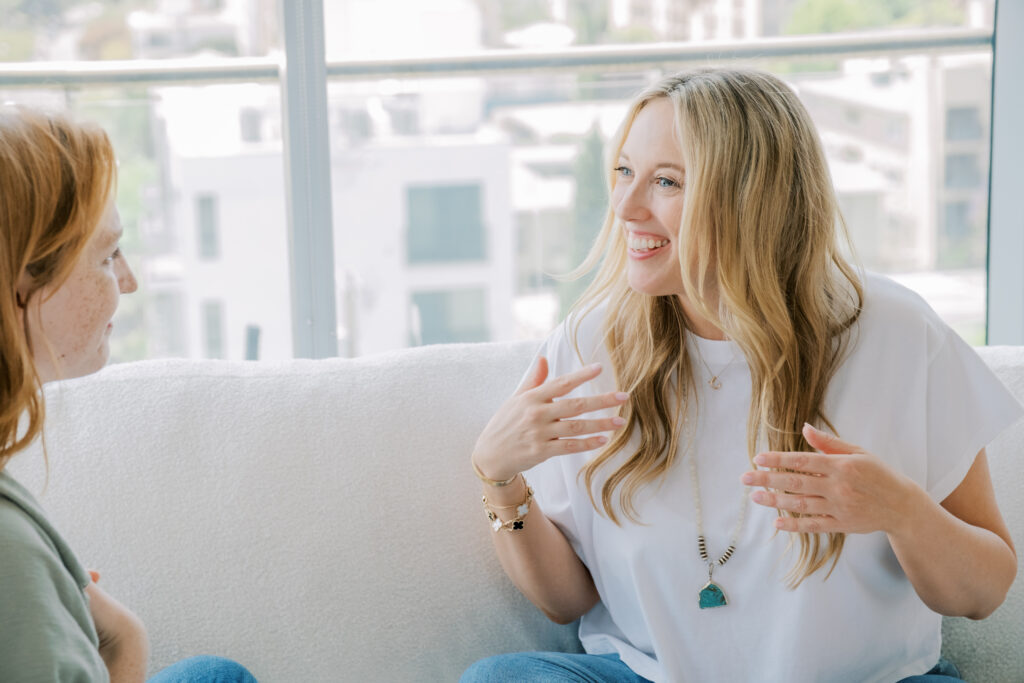
This is you as a magnetic, authentic, connected version of yourself.
Over time, allowing yourself to ask deeper questions helps build trust because you begin seeing more truth. Truth builds trust.
- How could you deepen your self-trust?
- Where do you tend to get caught up doing instead of being?
- What would you love to create in your life today?
Self-trust often looks like:
- Taking a step forward before you have all the answers
- Letting a timeline unfold instead of forcing it
- Changing your mind when new information appears
- Walking away from something that no longer aligns
- Resting without feeling guilty
- Being willing to disappoint others in order to stay true to yourself
Remember, upleveling in life often means becoming someone new.
The version of you that got you here may not be the version that’s meant to take you where you’re going next.
Growth often looks like releasing old patterns, letting go of what no longer serves you, choosing different habits, and responding to life in new ways even when you feel uncertain, uncomfortable, or out of your depth.
It means being willing to ask more questions than you have answers.
It means trusting your process and trusting your timeline.
Self-trust isn’t believing everything will go exactly as planned–it’s knowing that no matter what happens, you’ll find your way.
I love hearing from you, too. Any shares, comments, topic ideas, or support you need, feel free to reply here.
With love,
Laurin












read comments or leave a comment...